

View Quick Summary
AI interior design tools excel at generating inspiration, mood boards, and color palettes but cannot replace professional designers. AI lacks critical capabilities including accurate space planning, understanding client lifestyle needs, material selection requiring tactile experience, technical lighting design, and contractor coordination. Use AI for initial ideas, but hire designers for functional, buildable spaces tailored to your unique requirements
What AI Can and Cannot Do for Interior Design: A Designer's Perspective
Understanding AI's Role in Modern Interior Design
Artificial intelligence has transformed countless industries, and interior design is no exception. From generating mood boards to suggesting color palettes, AI tools have become increasingly popular among homeowners and designers alike. But can AI really replace the expertise of a professional interior designer? The answer is more nuanced than you might think.
What AI Does Well in Interior Design
Idea Generation and Inspiration
AI excels at generating visual inspiration quickly. Tools like Midjourney, DALL-E, and specialized interior design AI platforms can create beautiful renderings based on text prompts. Need to visualize a mid-century modern living room with emerald green accents? AI can generate dozens of options in minutes.
This capability is genuinely useful for:
- Exploring different aesthetic directions
- Creating mood boards rapidly
- Visualizing color combinations
- Generating multiple style variations
- Sparking creative ideas when you're feeling stuck
Pattern Recognition and Trend Analysis
AI algorithms are exceptional at analyzing vast amounts of design data to identify current trends. They can scan thousands of interior design images to recognize popular color schemes, furniture styles, and material combinations that are trending in specific regions or demographics.
Basic Color Palette Suggestions
AI tools can analyze images and suggest complementary color palettes based on color theory principles. They understand which hues work well together and can generate cohesive color schemes that are visually appealing.
Product Recommendations
Some AI platforms can suggest furniture and decor items based on style preferences, similar to how e-commerce sites recommend products. While this can be helpful for initial research, it lacks the nuanced understanding of quality, scale, and appropriateness that experienced designers bring.
Where AI Falls Short: The Irreplaceable Value of Human Designers
Space Planning Requires Physical Understanding
Here's where AI hits a significant wall: practical space planning. While AI can generate beautiful room images, it cannot:
- Accurately measure and assess your actual space
- Account for architectural constraints like load-bearing walls, awkward angles, or ceiling heights
- Understand traffic flow patterns and how people actually move through spaces
- Recognize structural limitations that impact furniture placement
- Consider door swings, window placements, and their impact on layout
- Factor in electrical outlet locations, HVAC vents, and other utilities
Professional interior designers don't just make spaces look good—they make them work. They understand ergonomics, building codes, and the countless practical considerations that AI simply cannot assess without physical presence and professional training. I can't tell you how many people I've been able to show that their ideas are not really to scale or aren't practical due to city permit constraints, etc. A designer will protect your investment while preventing you from making costly mistakes, and typically for a very affordable price.
AI Cannot Read Your Unique Needs
Every client has unique requirements that go far beyond aesthetic preferences:
- Lifestyle considerations: How you actually live in your space (Do you entertain frequently? Work from home? Have young children or pets?)
- Physical limitations: Mobility issues, accessibility needs, or health considerations
- Budget realities: Understanding where to splurge versus save based on your specific situation
- Existing constraints: Working around furniture you want to keep, architectural features you cannot change, or HOA restrictions
AI can be taught about you by what you tell it but it cannot pick up on unspoken needs the way an experienced designer can during an in-person consultation. 90% of communication is non-verbal and designers learn what to pick up on, where to ask follow-up questions, and to include all the things a normal person wouldn't know to consider.
Material Selection Demands Tactile Experience
Choosing materials is about more than how they look in a photograph:
- Texture: How does the fabric feel? Is the leather soft or stiff?
- Durability: Will this upholstery fabric withstand daily use with kids and pets?
- Light interaction: How does this paint color look in northern versus southern light?
- Scale and pattern: Does this wallpaper pattern overwhelm a small room in person?
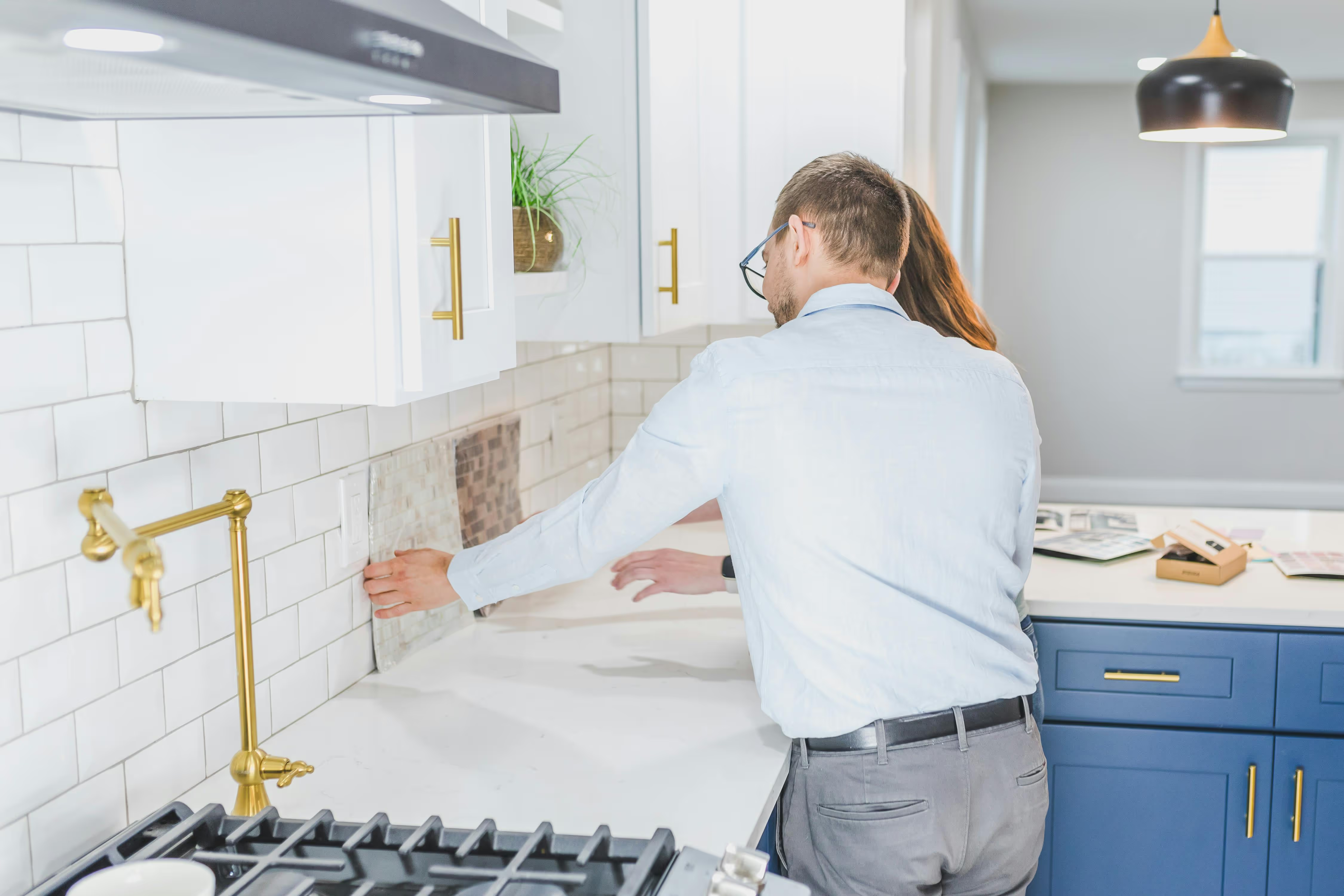
Professional designers bring fabric samples, paint chips, and material boards to your actual space. They understand how materials perform over time, which manufacturers offer superior quality, and which finishes will hold up to your specific use case as well as how these finishes and colors will work together.
Lighting Design Is Complex and Critical
AI-generated images often show beautifully lit spaces, but creating that lighting in reality requires deep technical knowledge:
- Layering ambient, task, and accent lighting
- Calculating lumens and color temperatures for different activities
- Positioning fixtures to avoid glare and shadows
- Specifying dimmer switches and smart lighting controls
- Understanding electrical requirements and code compliance
- Selecting fixtures that provide both function and beauty
- Understanding how the sunlight will affect the spaces at different times of day
Contractor Coordination and Project Management
Perhaps one of the most valuable services interior designers provide has nothing to do with aesthetics at all:
- Creating detailed construction documents contractors can actually use
- Sourcing and ordering materials with professional trade discounts
- Coordinating between multiple contractors and tradespeople
- Problem-solving when field conditions don't match plans
- Ensuring work meets quality standards
- Managing timelines and keeping projects on track
AI cannot make phone calls, visit job sites, or negotiate with contractors on your behalf.
The Intangible: Design Intuition and Experience
Experienced designers develop an intuition that comes from years of completed projects:
- Knowing which trends have staying power versus what will feel dated quickly
- Understanding which "rules" can be broken for stunning effect
- Recognizing potential problems before they become costly mistakes
- Adapting designs when unexpected challenges arise
- Balancing multiple competing priorities and constraints
This wisdom cannot be replicated by algorithms trained on images alone.
The Best Approach: AI is a Tool, Not a Replacement
Smart interior designers are embracing AI as a tool in their workflow while recognizing its limitations. AI can handle time-consuming tasks like generating initial concept images or compiling trend research, freeing designers to focus on what they do best: understanding clients, solving spatial problems, and bringing technical expertise to complex projects.
For homeowners, AI tools can be excellent for:
- Initial inspiration gathering
- Exploring style preferences before meeting with a designer
- Visualizing simple cosmetic updates like paint colors
But for comprehensive remodels, space planning, material selection, and project execution, the expertise of a professional interior designer remains irreplaceable.
Conclusion: The Human Touch in Design
Interior design is fundamentally about creating spaces where people live, work, and thrive. It requires empathy, spatial intelligence, technical knowledge, and creative problem-solving which are all distinctly human capabilities. While AI is a powerful tool for generating ideas and streamlining certain tasks, it cannot replace the comprehensive skill set professional designers bring to transforming houses into homes.
When you're ready to move beyond inspiration and into actual implementation, partnering with us here ar Intuitive Interiors to ensure your space is not just beautiful, but functional, buildable, and perfectly tailored to your unique needs.
Check Out Some Of Our Other Blogs
Ready to Love Your Home Again?
Stop living with spaces that don't work for you. Whether you need a complete redesign or just some expert guidance, We're here to help create the home you've always wanted.
Let's Create Your Dream Space
Ready to transform your home? Share your vision and we'll show you how we can bring it to life. Whether you're updating a single room or reimagining your entire space, we'll guide you through every step of the design process.